The Work of Ordinary Days
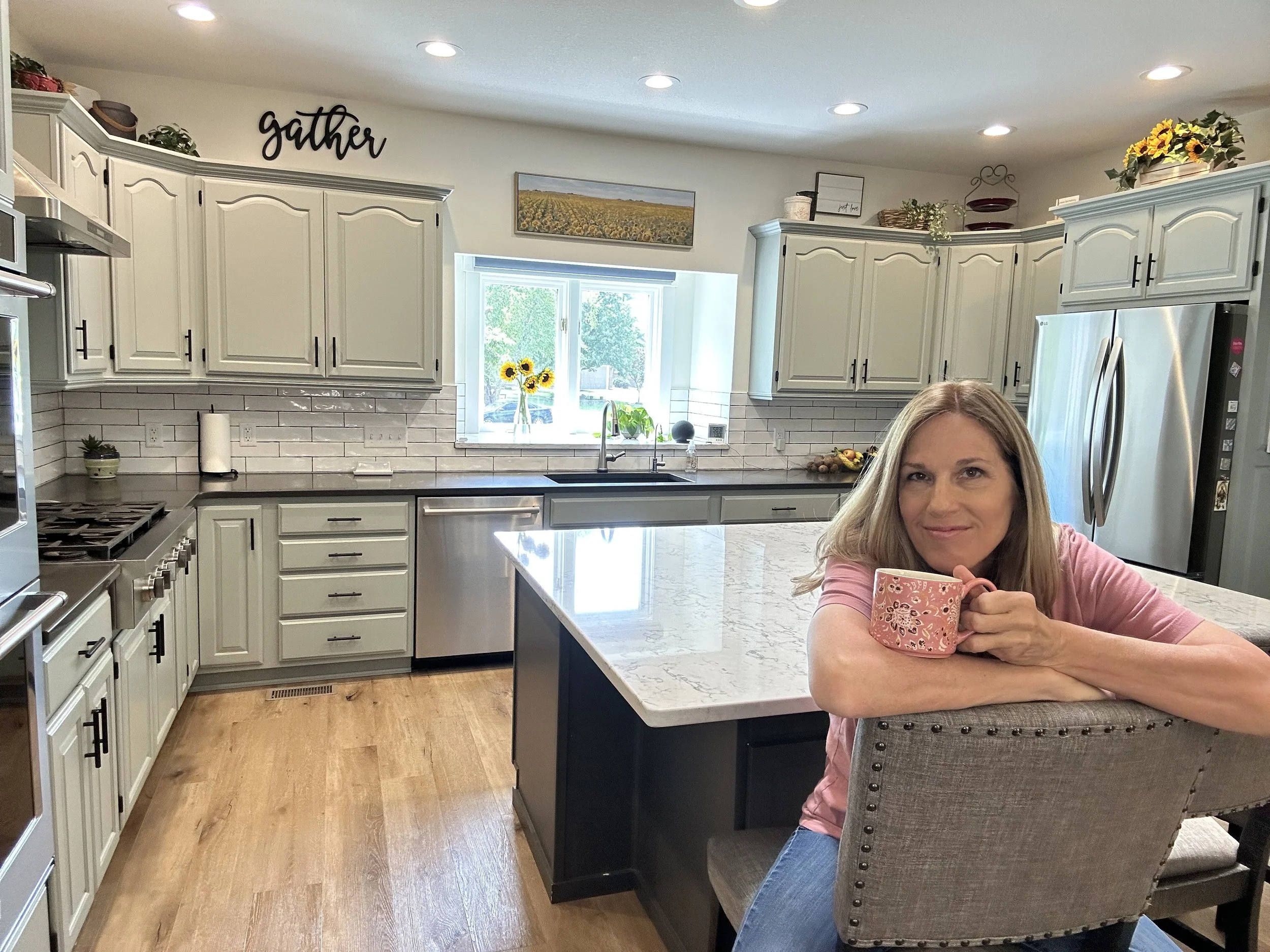
Sitting in my newly remodeled—and very clean—kitchen, my heart is happy.
I recall the intense years, when every single surface was covered with papers; six or seven backpacks were in and around the kitchen table; shoes were kicked off, flung in every direction.
My life revolved around meals to be made, laundry to be done, and it seemed that one child would need something important at the exact same time someone else needed me.
That was just the surface stuff. Down below, under the water line, was the deeper work of motherhood: helping the children learn self-care, how to stand up for themselves, how to be kind yet have boundaries. How to help them through disappointments, heartbreak, the ups and downs of friendships—as they pushed and pulled their way towards adulthood.
Some days felt wonderful, smooth as silk. Other days felt Alexander in the Terrible, Horrible, No Good, Very Bad Day book.
All days were loud.
A constantly moving river, this kitchen has ebbed and flowed with the tides and daily rhythm of life.
Morning was the busiest time as breakfasts were eaten, lunches packed, shoes found, and children rushed out the door in ten different directions.
There was not a lot of quiet time, and my mama’s heart carried the weight of loving and caring for so many people at different stages, all with different needs.
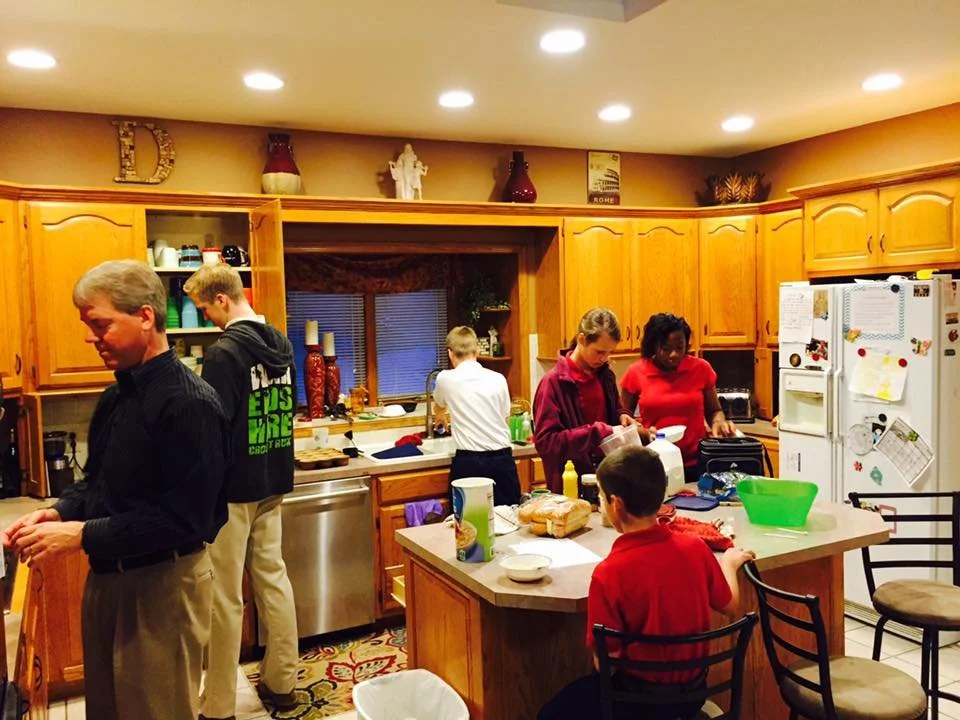
We always came back together after school, having snacks and getting ready for supper for our clan of ten.
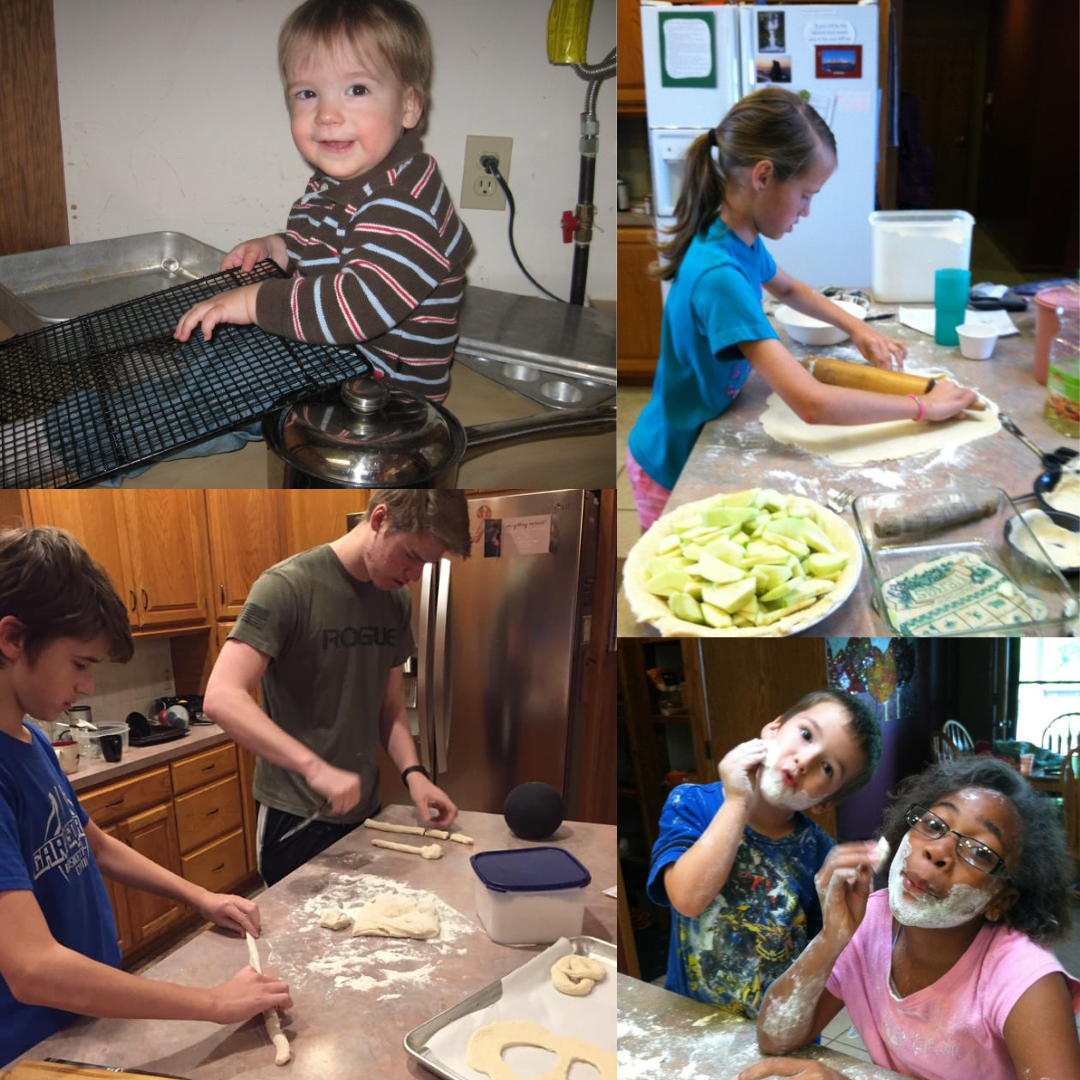
Kitchen was the place of apprenticeship, where eager helpers learned to crack eggs, make stromboli, wash dishes, take turns. They also learned (even the reluctant ones) how to work, serve and have conversations around our big Catholic table.
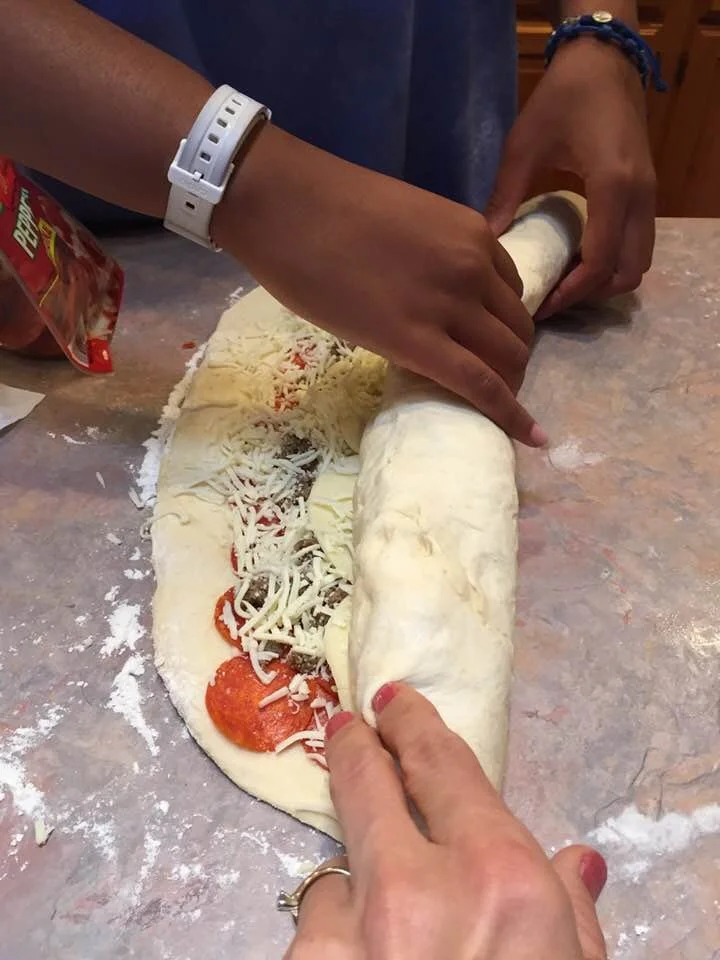
If I had to choose one place where I’ve mothered from, it would probably be standing behind my counter, kneading, mixing, creating meal after meal with my children while chatting and multi-tasking day in and day out. There was usually a baby on my hip or sitting near me in the pots and pans.
I smile the smile of someone who has run her race—happy, oh so happy—to be in this now easy-to-keep-clean, expansive, uplifting space.
As I think back to all of those intense times, I know there are so many moms living right now in that tornado of toddlers, teens, and everything in between.
A huge part of me wants to stand up and give her my seat in my quiet, clean kitchen. I want to give her a steaming cup of coffee and the time to drink it. I want to give her a special remote, one that somehow allows her to fast-forward through the hard parts of motherhood.
But then I stop that line of thinking, remembering some really good advice I received from a dear old man. His words have stayed with me through the years, becoming a north star of sorts.
When I graduated from college in 1989, I didn’t yet have a teaching job lined up. My husband, Russ, and I had just moved from Lincoln, Nebraska, to St. Louis, Missouri, so I took a temporary position as a Kelly Girl traveling nurse aide. (Do you remember Kelly Girls?)
The work brought me into the homes of elderly individuals, where I helped with cleaning and daily tasks. I was their companion. It was quite lovely.
Mr. Israel was one of my assigned clients.
Driving my little rust bucket of a car into his gated community felt like I was a commoner entering a palace. His condo was the nicest home I’d ever been in. The furniture was lavish, a visible testament to a life of success.
As I cleaned his gorgeous home, I often wondered what it would be like to live with the money he had. I imagined the positive impact if he happened to “gift” me 10K.
Isn’t that funny? I was always kind of pining for him to adopt me as his Catholic (but willing to be Jewish) daughter.
One day Mr. Israel and I were talking, and he started sharing how hard he had worked in his life.
Being astute, Mr. Israel probably noticed my desire—a desire to be where he was in his life—shining in my coveting eyes.
He got quiet, leaned in and shared this with me:
“Lori, you and Russ are going to build a wonderful life together.”
I looked at him doubtfully.
He continued, “You are. See, my wife and I worked hard in our 20’s and 30’s and 40’s. We raised our kids. I worked long hours. We created our lives. Every day. And it is that—the daily doing—that makes life rich with meaning.
“You and Russ are going to work hard for the next thirty years. There will be ups and downs, but don’t ever try to short cut it. That PROCESS is what gives life deep meaning.
“When you get to be my age, you will be able to look back and be proud of what you’ve built. No one can give that to you. You earn it.”
He was so earnest. His words resonated in my head and in my heart, and I felt like I could believe him.
And now, sitting at my kitchen counter, steaming mug in hand, I understand.
This space is a testament to the life Russ and I have built. I’m not talking about the remodeled kitchen. I’m talking about the years of waking up when I was still tired, doing what needed to be done for the children. Over and Over and Over.
I not only built a life in this kitchen, I built a life I love—with people I would die for. Over and Over and Over.
Mr. Israel was right.
It’s the doing of daily life that makes life rich with meaning.
No one could have given that to me. It was built slowly, “earned” through thousands of ordinary days strung together with faith, laughter, tears, joy, swear words.
So even though I want to give a younger mom my seat, I know I would not. I could not. It would actually be a disservice to her.
The clutter? The chaos? The crazy? It’s not in the way of a good life. It IS the good life.
So as you go about your life this Mother’s Day weekend, giving to those you love the most, may you have the eyes to appreciate the gifts that you can see from the beautiful vantage point of your glorious (and probably sticky) seat.
Happy Mother’s Day.
P.S. If you enjoyed this blog post, sign up to get emails delivered to your inbox every Thursday morning: